Introduction: The Journey After the Credits Roll
Most high-fantasy epics in anime and manga conclude with a triumphant crescendo: the Dark Lord is vanquished, the kingdom is saved, and the heroes ride off into a glowing sunset. But what happens to the heroes after the confetti settles and history turns the page? This is the poignant premise behind Frieren: Beyond Journey's End (Sousou no Frieren), a monumental work written by Kanehito Yamada and illustrated by Tsukasa Abe. Rather than sprinting toward the next high-stakes escalation, the narrative starts where traditional stories end, exploring the quiet, echoing aftermath of victory through the eyes of an immortal elf.
As the series continues to captivate global audiences and dominate seasonal rankings, it has fundamentally altered expectations for modern storytelling in the medium. By swapping explosive adrenaline spikes for a deep, contemplative study on time, memory, and grief, Frieren has established a new benchmark for narrative elegance.
Summary & Premise (Spoiler-Free)
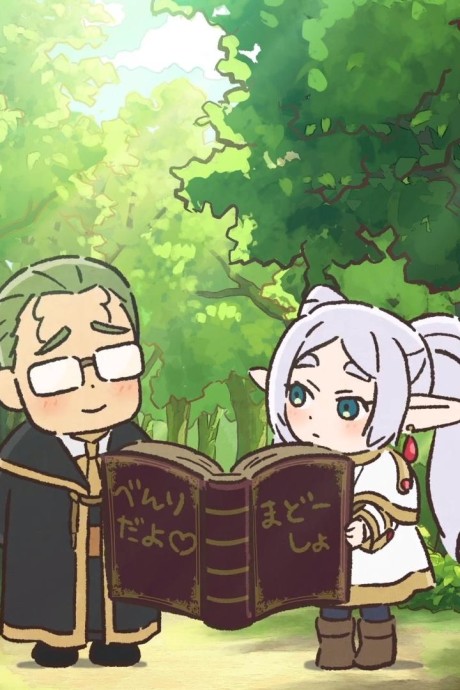
The story follows Frieren, an elven mage who was part of the legendary party that defeated the Demon King after a grueling ten-year quest. To a human lifespan, a decade is a monumental epoch; to an elf who measures existence in millennia, it was merely a brief, fleeting blink. Following the death of Himmel the Hero of old age, Frieren is struck by a crushing realization: she never truly made an effort to understand her human companions while they were alive.
Motivated by a belated desire to comprehend human emotion and the value of short-lived bonds, Frieren embarks on a new pilgrimage—this time retracing the exact path of their original adventure alongside her young human apprentice, Fern, and the warrior Stark. Along the way, the series weaves past flashbacks with present trials, examining how memories shape our present and how love persists long after physical presence has faded.
In-Depth Narrative and Thematic Analysis
At its philosophical core, Frieren is an exploration of temporal dissonance. Time is treated not merely as a background element, but as a living, breathing character. Frieren's perception of time creates a profound emotional contrast that drives the series forward:
- The Weight of Mortality: Humans like Himmel, Heiter, and Eisen live with the urgent knowledge that their time is finite. This urgency gives their choices, kindnesses, and ambitions profound gravity.
- Elven Detachment: Elves view decades the way humans view afternoon naps. Frieren's character arc focuses on breaking out of this emotional apathy, learning that shortcuts in relationships rob life of its true flavor.
- The Ripple Effect of Small Kindness: Much of Frieren's character growth stems from uncovering seemingly insignificant things Himmel did in the past—planting flowers, buying cheap rings, or helping strangers—and realizing their monumental long-term impact.
The narrative structure mirrors this pacing. Action sequences are sparse, purposeful, and surgically precise rather than drawn-out slugfests. When magic is deployed, it feels mystical, dangerous, and deeply entrenched in the lore of the world, avoiding lazy power-scaling tropes common in modern battle shonen.
Visuals and Audio: A Masterclass in Atmosphere
Produced by studio Madhouse, the visual presentation of Frieren is nothing short of breathtaking. The art direction emphasizes vast, sweeping natural landscapes, melancholic color palettes, and painterly backgrounds that make every frame look like a storybook illustration. Character designs maintain clean, expressive lines that lean into subtle micro-expressions rather than exaggerated anime tropes.
Equally stellar is the audio design. Composed by Evan Call, the musical score blends haunting Celtic folk instrumentation, melancholic strings, and sweeping orchestral movements that elevate quiet moments of reflection into unforgettable emotional peaks. The voice acting further anchors this atmosphere; Atsumi Tanezaki delivers a masterclass performance as Frieren, portraying her with an ethereal, deadpan detachment that slowly melts into profound warmth and vulnerability.
Pros and Cons
To truly understand why this series resonates so deeply, it helps to examine its structural strengths alongside its potential deterrents for certain viewers:
- Pros: Exceptional, emotionally resonant writing; industry-leading animation and background art; deeply human characters despite fantastical settings; a phenomenal, immersive musical score by Evan Call.
- Cons: The slow, deliberate pacing may alienate fans looking for non-stop action; some early episodes require patience as the world and emotional stakes are carefully established.
Final Conclusion & Recommendation
Frieren: Beyond Journey's End is a rare milestone in anime and manga history—a story that treats its audience with immense intellectual and emotional respect. It reminds us that while time inevitably marches forward, the connections we forge and the memories we leave behind are the closest things we have to true eternity.
Overall Verdict: 9.8/10
Recommendation: This series is an absolute must-watch for fans of deep narrative world-building, emotional character studies, and atmospheric fantasy. If you appreciate stories that prioritize emotional truth, poetic pacing, and unforgettable artistic beauty over mindless spectacle, Frieren will leave a permanent mark on your heart.