Introduction to the Shadow Monarch's Reign
The landscape of modern action anime has undergone a seismic shift, largely driven by the explosive crossover success of webtoon adaptations. Among them, Solo Leveling stands out as an absolute titan. Ever since Sung Jinwoo transitioned from the pathetic 'Weakest Hunter of All' to the terrifying, sovereign wielder of death, the global fanbase has been hooked. Following a monumental debut season, Solo Leveling Season 2 -Arise from the Shadow- dropped into the Winter 2025 anime lineup with massive expectations. Rather than merely coasting on the visual spectacle of its predecessor, the second season digs deeper into the mechanics of the System, expanding the fictional universe and refining a power fantasy formula into a masterclass of pacing and high-stakes action.
Summary of the Narrative Journey
(Spoiler Warning: Brief overview of Season 2 setup follows.) Picking up immediately after the harrowing events of the Cartenon Temple and Jinwoo's harrowing solo trials, Season 2 plunges the protagonist deeper into the perilous world of gate outbreaks, international politics, and guild rivalries. Jinwoo is no longer just trying to pay hospital bills for his mother; he is navigating the crosshairs of the Korean Hunters Association and ominous foreign powers who have noticed his anomalous, limitless growth. The narrative pivots from simple dungeon crawling to a sweeping geopolitical chess match, all while Jinwoo unlocks the true potential of the Shadow Monarch class, leading up to iconic confrontations like the Red Gate arc and the subjugation of the formidable ant colony on Jeju Island.
In-Depth Narrative and Thematic Analysis
At its core, Solo Leveling is often mischaracterized as a superficial power-trip simulator. However, a closer critical analysis reveals compelling underlying themes concerning systemic exploitation, isolation, and individual agency. The 'System' that dictates Jinwoo's leveling acts as a metaphor for corporate meritocracy and late-stage capitalist survival, where the weak are systematically weeded out, and the strong accumulate infinite capital—or in this case, mana and authority.
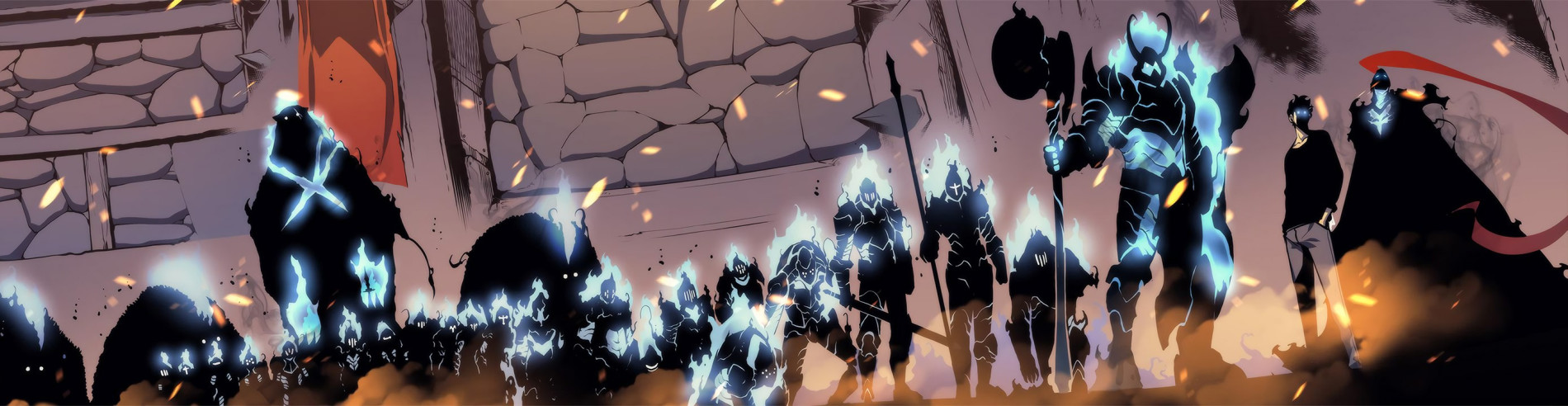
- The Burden of Absolute Power: Unlike typical shonen protagonists who share their burdens with tight-knit friendship circles, Jinwoo's power is inherently isolating. His ability to turn enemies into loyal shadow soldiers emphasizes a lonely ascent to godhood.
- Subversion of Trope Hierarchies: The series constantly critiques the complacency of institutional guilds. The elite upper class of hunters rely on stagnant rank systems, whereas Jinwoo’s adaptive resilience shatters these rigid social constructs.
- Pacing and Escalation: The narrative structure mirrors video game design loops—quest acceptance, grinding, boss battles, and loot acquisition—translated seamlessly into serialized storytelling without feeling redundant.
- Pros: Exceptional fight choreography and fluid character animation; massive lore expansion regarding the origin of the hunters and monarchs; stellar musical score and voice acting performances; highly satisfying progression and payoff for core fans.
- Cons: Side characters outside of Jinwoo occasionally suffer from a lack of deep psychological exploration; narrative stakes can occasionally feel skewed due to the overwhelming power gap favoring the protagonist.
Visuals, Animation, and Soundscapes
A-1 Pictures delivered a tour de force in production value for Season 2. The transition from static webtoon panels to fluid, cinematic motion is handled with meticulous choreography. Fight sequences are characterized by dynamic camera angles that emphasize weight, spatial awareness, and raw impact. The color grading leans heavily into neon blues, stark purples, and deep shadows, visually reinforcing the necrotic nature of Jinwoo's abilities.
On the audio front, the collaboration is equally stellar. Hiroyuki Sawano’s pulse-pounding score returns with heavier industrial synth arrangements, elevating tension during critical turning points. Furthermore, the high-profile opening theme 'ReawakeR' by LiSA featuring Stray Kids' Felix, alongside TK from Ling tosite sigure’s haunting ending theme 'Un-Apex', frames each episode with an unforgettable auditory identity that resonates deeply with modern anime aesthetics.
Pros and Cons
Every major production has its distinct strengths and minor shortcomings. Here is a balanced look at what makes Season 2 shine and where it occasionally stumbles:
Final Conclusion and Recommendation
Overall Rating: 9/10
Solo Leveling Season 2 -Arise from the Shadow- successfully validates the hype, proving that webtoon adaptations can match—and frequently exceed—the production prestige of traditional manga heavyweights. It is an essential watch for action enthusiasts, dark fantasy lovers, and anyone who appreciates elite-tier animation studio execution. Whether you are a veteran reader of Chugong's original web novel or a newcomer drawn in by the viral combat sequences, this season cements Jinwoo's legacy as an iconic anime protagonist of the decade.