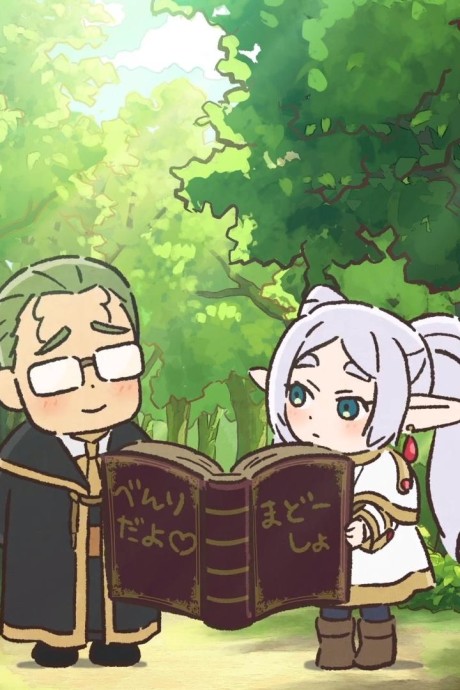
Redefining the Echoes of Fantasy: Why Frieren Stands Alone
In a genre heavily saturated with fast-paced action, high-stakes power escalations, and sudden power-ups, Frieren: Beyond Journey's End (Sōsō no Frieren) arrives not with a battle cry, but with a quiet, lingering sigh. Written by Kanehito Yamada and illustrated by Tsukasa Abe, this narrative masterwork poses a simple yet profound question that most epic fantasies ignore: What happens after the world is already saved?
Produced by Studio Madhouse and directed by Keiichirō Saitō, the anime adaptation takes this delicate premise and elevates it into a cinematic marvel. Rather than beginning at the start of a ten-year crusade to defeat the Demon King, Frieren begins at the finish line. What follows is a deeply reflective study on time, human connection, grief, and the quiet beauty hidden within everyday moments. In this in-depth analysis and review, we explore how Frieren subverts traditional storytelling, dissect its standout cast, evaluate its visual and auditory grandeur, and determine why it marks a watershed moment for high-fantasy animation.
Narrative Premise & Summary: Life After the Happy Ending
The story opens with the triumphant return of the Hero’s Party—composed of the courageous hero Himmel, the devout priest Heiter, the stoic dwarven warrior Eisen, and the ancient elven mage Frieren. They have slain the Demon King, bringing a century of peace to the realm. To Himmel and his companions, the ten-year journey was a defining chapter of their lives. But to Frieren, an elf with a lifespan spanning thousands of years, a decade is merely a blink of an eye—a brief fraction of a percent of her total existence.
The group watches a meteor shower that occurs once every fifty years, promising to gather again half a century later for a better view. When Frieren returns decades later, she finds her former companions aged and frail. Himmel dies shortly after their brief reunion. Standing over his grave, Frieren undergoes a devastating realization: despite spending a decade by his side, she knew almost nothing about him, having brushed off human life spans as fleeting and insignificant. Overcome with regret, she embarks on a new journey toward the northern region of Ende—where souls are said to rest—not to save the realm, but to learn how to truly understand human beings before it is too late. Along the way, she takes on Fern, a talented orphan mage, and Stark, an insecure yet exceptionally brave young warrior, forming a new party that retraces the footsteps of her past.
In-Depth Character & Thematic Analysis
1. Frieren: The Perception of Eternal Time
Frieren’s character design and personality reflect her long lifespan. She views time horizontally rather than vertically. A search for a rare flower that takes three years is to her a brief weekend project. However, her character development does not come from gaining physical power; it stems from emotional awakening. Through retracing her steps, Frieren begins to re-examine small, forgotten moments with Himmel. She comes to understand that Himmel’s silly statues and eccentric requests were not frivolous self-aggrandizement, but deliberate attempts to ensure Frieren would never feel lonely in the centuries after his passing.
2. The Found Family: Fern and Stark
Fern and Stark serve as vital emotional anchors for Frieren and the audience alike. Fern represents practical, grounded maturity; her strict demeanor counterbalances Frieren’s childish quirks (such as her obsession with collecting mundane folk magic, like removing rust or making sour grapes sweet). Stark introduces relatable vulnerability—a warrior who trembles in fear before battle yet steps forward anyway out of instinctual bravery. The dynamic between these three characters creates a grounded, realistic family dynamic that mirrors the original party’s warmth.
3. The Anatomy of Demons: True Monsters
Where many modern fantasy series humanize their antagonists, Frieren makes a bold narrative choice regarding its demons. Demons in this universe are not misunderstood antiheroes; they are solitary, apex predators that evolved to mimic human speech solely to deceive and hunt human prey. They lack empathy, guilt, or social bonds. This conceptual clarity adds genuine tension to conflict encounters, contrasting sharply with the gentle tone of the everyday travel sequences.
Visual & Auditory Craftsmanship
Animation & Art Direction
Studio Madhouse delivers a stunning visual experience. The art direction prioritizes scale, atmospheric lighting, and meticulous environmental detail. Backgrounds feel like hand-painted oil canvases, capturing lush forests, decaying stone fortresses, and vast snow-covered mountain passes.
While Frieren is predominantly a slice-of-life fantasy, its combat sequences feature incredible fluidity. Fights do not rely on loud, shouted technique names; instead, they focus on weight, spatial awareness, and crisp choreography. When Fern fires basic defensive and offensive magic, the impact feels heavy and dangerous. The balance between quiet stillness and explosive action elevates the production to top-tier status.
Soundtrack & Voice Acting
Composed by Evan Call (known for Violet Evergarden), the musical score is a masterclass in folk-inspired orchestration. Utilizing acoustic guitars, lutes, flutes, and soaring choral arrangements, the soundtrack amplifies the melancholy and wonder of the landscape. Voice actress Atsumi Tanezaki delivers a subtle performance as Frieren, conveying centuries of detachment transitioning into genuine warmth with delicate shifts in cadence and tone.
Pros & Cons
Pros
- Unique Perspective: Reverses the classic fantasy formula by exploring the aftermath of victory and the passage of time.
- Masterful Pacing: Patient, contemplative storytelling that allows emotional beats to breathe naturally without rushing.
- Exceptional World-Building: The world feels lived-in, featuring rich historical context and distinct cultural regions.
- Top-Tier Production Values: Stunning background art, fluid animation, and a memorable soundtrack by Evan Call.
Cons
- Slower Initial Pace: Viewers expecting constant, high-octane battle shonen action may find the early slice-of-life pacing slow.
- Understated Tone: The restrained emotional delivery requires attentive viewing to fully appreciate its depth.
Final Conclusion & Verdict
Frieren: Beyond Journey's End is a monumental achievement in modern anime storytelling. It demonstrates that fantasy does not always need world-ending threats or chaotic pacing to be captivating. By centering its narrative on time, memory, and the value of human connection, it delivers a deeply moving reflection on what it means to live a meaningful life.
Final Rating: 9.8 / 10
Who is this for? Essential viewing for fans of high fantasy, character-driven dramas, and introspective slice-of-life narratives. If you appreciated series like Violet Evergarden, Mushishi, or classic Studio Ghibli films, Frieren is an absolute must-watch.