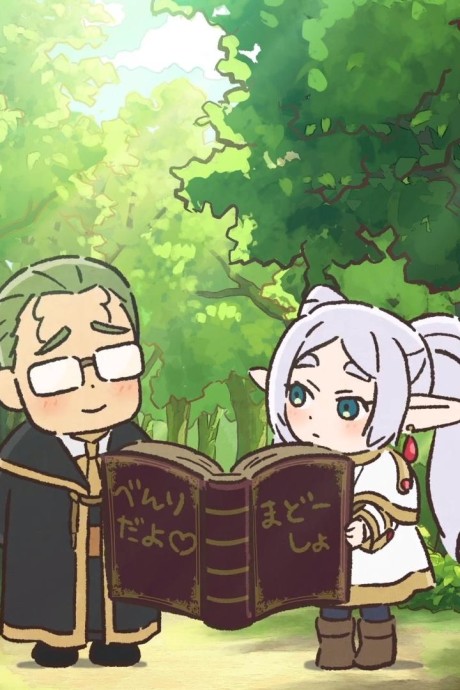
Introduction: The Fantasy That Begins Where Others End
For decades, classic high-fantasy narratives have followed a well-trodden heroic formula: a motley group of adventurers unites under dire circumstances, fights across treacherous lands, and ultimately defeats the Demon King to save the world. The story traditionally closes as the triumphant heroes watch the sun rise over a newly peaceful realm, their quest fulfilled and their fates sealed. However, author Kanehito Yamada and illustrator Tsukasa Abe posed a profoundly quiet question when creating Frieren: Beyond Journey's End (Sōsō no Furīren): What happens after the hero's quest is already over? What becomes of those left behind when triumph fades into history?
When Studio Madhouse released its monumental anime adaptation, directed by Keiichirō Saitō with series composition by Tomohiro Suzuki, audiences were treated to far more than a visually spectacular fantasy adventure. The series delivered a deeply poignant meditation on mortality, human connection, and the bittersweet passage of time. By shifting its lens away from non-stop action and focusing instead on the quiet, lingering moments that define a lifetime, Frieren has cemented its status as one of the most remarkable narrative achievements in modern anime. In this comprehensive analysis, we break down how the series deconstructs fantasy conventions, why its character dynamics resonate so deeply, and how its technical craftsmanship sets a new benchmark for the industry.
Summary & Premise: A Century-Long Quest for Understanding
Note: The following summary is spoiler-free regarding major late-narrative developments.
The narrative of Frieren: Beyond Journey's End opens at what would normally be the climax of any other fantasy epic: the triumphant return of the Hero's Party. Having defeated the Demon King after a grueling ten-year journey, Himmel the Hero, Eisen the Dwarf warrior, Heiter the human priest, and Frieren, an immortal elven mage, return to the royal capital to celebrate their victory. For Himmel, Eisen, and Heiter, a decade represents a substantial portion of their mortal lives. For Frieren, who has lived for well over a millennium, ten years is merely a fleeting blink—an ephemeral pitstop in an endless existence.
After watching a rare meteor shower together, Frieren casually bids her companions farewell, promising to return in fifty years to watch the celestial event with them once more. When she returns half a century later, however, she finds her former comrades graying, frail, and near the end of their days. Shortly after their brief reunion, Himmel dies of old age. Standing before his grave as the townsfolk mourn the fallen hero, Frieren experiences a devastating, sudden realization: despite spending ten full years traveling across the continent with Himmel, she knew almost nothing about him—and worse, she had made no conscious effort to understand him simply because human lives seemed so brief and insignificant.
Overcome with quiet remorse, Frieren embarks on a new journey north toward Aureole, the mythical land of resting souls located at the site of the former Demon King's castle. Along the way, accompanied by her disciplined young human apprentice Fern and the courageous warrior Stark, Frieren retraces the path of her ancient quest. This time, her purpose is not to conquer a dark lord, but to collect minor magic spells, honor the memory of her fallen friends, and slowly learn what it truly means to love and understand short-lived mortals.
In-Depth Narrative & Thematic Analysis
1. The Relativity of Time and Quiet Grief
The core narrative brilliance of Frieren lies in its exploration of time through the perception of an immortal protagonist. To Frieren, a detour that lasts three months or a delay that spans half a decade is trivial. Yet, the story constantly contrasts her long-term view with the fragile, rapid burn of human existence. Human lives ignite and extinguish in what feels to Frieren like the blink of an eye.
This emotional contrast shapes the entire tone of the series. Grief in Frieren is not presented through explosive outbursts or theatrical tragedy; rather, it manifests as a quiet, atmospheric shadow. Frieren's regret over Himmel does not crush her immediately; instead, it gradually rewires her interactions with the world. Every small town she visits contains a weathered statue of Himmel or a local legend detailing his random acts of kindness. As Frieren walks in his footsteps decades later, she slowly unravels the true depth of Himmel's unspoken love for her, turning her passive nostalgia into an active journey of emotional awakening.
2. Character Dynamics and Relational Evolution
The core trio driving the narrative forward offers a masterful study in intergenerational dynamics and quiet growth:
- Frieren: On the surface, Frieren is a legendary archmage whose power is wrapped in an unassuming, chronically sleepy demeanor. She loves sleeping in late, getting trapped in Mimic treasure chests, and collecting absurdly niche spells—such as turning sour grapes sweet or removing rust from bronze statues. Yet beneath her stoic exterior lies a deeply caring mentor who is subtly learning how to express affection and cherish temporary bonds.
- Fern: Rescued as an orphan by Heiter and trained in magic, Fern is a pragmatic, highly disciplined prodigy who serves as the emotional stabilizer of the group. Her dynamic with Frieren cleverly reverses traditional mentor-student roles: while Frieren teaches Fern complex magical theory, Fern ensures Frieren wakes up on time, manages their travel budget, and eats balanced meals.
- Stark: Trained by Eisen the Dwarf, Stark is a brave warrior whose martial strength is matched only by his deep self-doubt. Stark represents the human heart of the group—he feels palpable fear before dangerous encounters, worries about his worthiness, and seeks validation. His awkward, sweet rapport with Fern provides genuine warmth and relatable coming-of-age charm.
- Himmel the Hero: Though deceased from the beginning, Himmel remains one of the most influential characters in the entire story. Through flashbacks and memories, Himmel is revealed not as an arrogant savior, but as a deeply compassionate, slightly narcissistic man who used his heroism as a vehicle to ensure people would remember him—and, above all, so Frieren would never feel lonely when he was gone.
3. Reimagining Fantasy Tropes and Magical Systems
Unlike contemporary fantasy anime that rely heavily on explicit power levels, status screens, or video-game mechanics, magic in Frieren is framed as an imaginative art form. In this world, a wizard can only cast a spell if they can clearly visualize the result. Magic is fundamentally rooted in human curiosity, mental discipline, and personal philosophy. A spell that creates a field of warm flowers requires the caster to truly hold the warmth and beauty of those blossoms in their heart. This conceptual foundation makes magic feel mysterious, romantic, and dangerous all at once.
Furthermore, the depiction of Demons in Frieren stands out as a triumph of fantasy writing. Demons are not portrayed as tragic anti-heroes or misunderstood creatures; they are apex predators that use human language strictly as a tool for deception and manipulation. This distinction creates high-stakes psychological tension during combat, as Frieren's ruthless efficiency against demons earns her the terrifying moniker "Frieren the Slayer" (Sōsō no Furīren).
Visuals & Audio: A Triumph of Studio Craftsmanship
1. Direction and Animation Excellence by Studio Madhouse
Under the visionary direction of Keiichirō Saitō, Studio Madhouse produced an animation triumph. The visual direction balances serene slice-of-life environmental framing with kinetic action sequences. Background art features meticulous rendering of European-inspired landscapes, moss-covered ancient ruins, and snow-dusted mountain passes that reflect the quiet progression of seasons.
When battle demands action—such as the high-stakes duels during the First Class Mage Exam arc or the intense encounter with the clone of Frieren—the animation quality surges dramatically. Guided by action directors like Toru Iwazawa, the camera glides through three-dimensional space with extraordinary weight, particle detail, and impact frame precision without ever losing narrative cohesion.
2. Evan Call's Legendary Musical Score
The soundtrack composed by American-born composer Evan Call (celebrated for his work on Violet Evergarden) serves as the emotional engine of the entire series. Incorporating traditional Celtic folk instrumentation—including the dulcimer, psaltery, whistle, and acoustic strings—alongside sweeping orchestral arrangements, Call creates an atmospheric, timeless soundscape. Melancholic whistle melodies accompany long walks across windy plains, while grand choral arrangements transform battle scenes into mythic clashes.
3. Subtle and Grounded Voice Acting
The Japanese voice cast delivers exceptionally grounded, understated performances. Atsumi Tanezaki gives a masterclass in subtlety as Frieren, modulating her soft, dry tone to convey subtle warmth, quiet regret, or cold intensity during combat. Kana Ichinose captures Fern's transition from an anxious child to a composed young woman, while Chiaki Kobayashi brings earnest vulnerability to Stark. Nobuhiko Okamoto infuses Himmel with a charismatic blend of theatrical vanity and gentle tenderness that makes his presence unforgettable.
Pros & Cons
Pros:
- Unmatched Emotional Maturity: Explores grief, mortality, nostalgia, and human connection with incredible nuance and respect for the viewer's intelligence.
- Breathtaking Visual Execution: Features background artwork, expressive character animation, and action sequences produced by Studio Madhouse.
- Masterpiece Soundtrack: Evan Call's folk-infused orchestral score elevates every scene into an unforgettable cinematic moment.
- Sublime Pacing: Seamlessly balances quiet, atmospheric travel episodes with high-stakes, strategically brilliant magical combat.
- Memorable Character Writing: Highly relatable core party members whose relationships evolve through quiet actions rather than heavy exposition.
Cons:
- Deliberate Slow-Burn Rhythm: Viewers expecting relentless, fast-paced battle shonen action may find the early reflective episodes intentionally slow.
- Restrained Emotional Style: The series avoids melodramatic shouting match scenes, relying instead on quiet expressions that require attentive viewing.
Final Conclusion & Recommendation
Frieren: Beyond Journey's End is a rare, generational masterpiece that breathes new artistic life into the fantasy genre. By asking what happens after victory is won, the series transforms a simple travel story into a profound exploration of what makes human life meaningful. Supported by Madhouse's animation, Evan Call's score, and writing that treats every character with dignity, Frieren stands as an extraordinary artistic achievement.
Overall Rating: 9.8 / 10
Who Is This Show For? This series is essential viewing for anyone who appreciates character-driven fantasy, thoughtful explorations of memory and time, beautiful world-building, and artistic production value. Whether you are a lifelong anime fan or someone looking for a mature, emotionally resonant narrative like Violet Evergarden or Mushishi, Frieren's journey toward the northern edge of the world is a voyage you will never forget.