Introduction: The Return of the Shadow Monarch
When the first season of Solo Leveling debuted, it took the global anime community by storm, translating the legendary South Korean webtoon illustrated by the late DUBU (REDICE Studio) into a dynamic animated experience. Produced by A-1 Pictures, the initial run established Sung Jinwoo’s rise from the world's weakest E-rank hunter to a formidable necromancer capable of commanding armies of undead shadows. Following intense anticipation, Solo Leveling Season 2: Arise from the Shadow expands the narrative scale, diving deeper into the overarching lore of the Monarchs and Rulers while escalating the action to unprecedented heights.
Season 2 picks up immediately after Jinwoo’s job-change quest, where he unlocked his signature shadow extraction ability. Rather than resting on its laurels, the second season pushes Jinwoo into high-stakes dungeon raids, international political intrigue among S-rank hunters, and emotional personal milestones. This review delivers a comprehensive, detailed breakdown of the narrative trajectory, character evolution, production design, and overall impact of this standout sequel.
Summary & Narrative Overview
Spoiler Warning: This section contains mild plot setups for the early-to-mid arcs of Season 2.
Season 2 focuses on Jinwoo's quest to clear high-level dungeons to obtain the rare ingredients needed for the Divine Water of Life—the miraculous potion capable of curing his mother's magical coma, the 'Eternal Slumber'. As Jinwoo braves the terrifying multi-tiered Demon Castle, the outside world faces escalating threats from S-rank gate breakouts, culminating in preparations for the infamous Jeju Island Raid Arc.
Meanwhile, major hunter organizations—including the Korean Hunter Association led by Chairman Go Gun-hee and top-tier S-rank hunters like Cha Hae-in, Choi Jong-in, and Baek Yoonho—begin to realize that an unmapped, god-like power is operating right under their noses. Abroad, American forces and rival guilds like the Scavenger Guild, spearheaded by the vengeful S-rank hunter Hwang Dongsoo, set their sights on Jinwoo, laying the groundwork for international confrontation.
In-Depth Narrative & Character Analysis
1. Sung Jinwoo: Humanity vs. Absolute Power
The central thematic core of Season 2 lies in Jinwoo’s internal shift. Unlike typical shonen protagonists who battle through friendship and ideological debates, Jinwoo's journey is a pragmatic, solitary power fantasy. However, Season 2 provides crucial emotional grounding by emphasizing his driving motivation: his family. The moments surrounding his mother's awakening showcase a rare, quiet vulnerability that contrasts sharply with his cold, ruthless combat persona.
Simultaneously, the narrative explores the corrupting edge of his unique status as the 'Player'. As Jinwoo gains abilities that eclipse human limits, his demeanor becomes increasingly detached. He transitions from an underdog fighting for survival to a strategic commander who treats life-or-death battlefields with calculating precision.
2. Supporting Cast Expansion and World-Building
Where Season 1 was strictly hyper-focused on Jinwoo, Season 2 makes significant strides in broadening the world. S-rank Hunter Cha Hae-in receives extended screen time, giving viewers a closer look at her keen instincts, sword mastery, and growing intrigue regarding Jinwoo's unique magical aura. Guild leaders like Choi Jong-in (Hunters Guild) and Baek Yoonho (White Tiger Guild) illustrate the complex political ecosystem surrounding dungeon raids, showing how raid permits, mana resources, and hunter rankings dictate geopolitical power.
Visuals, Animation, & Audio Critique
1. Animation & Art Direction (A-1 Pictures)
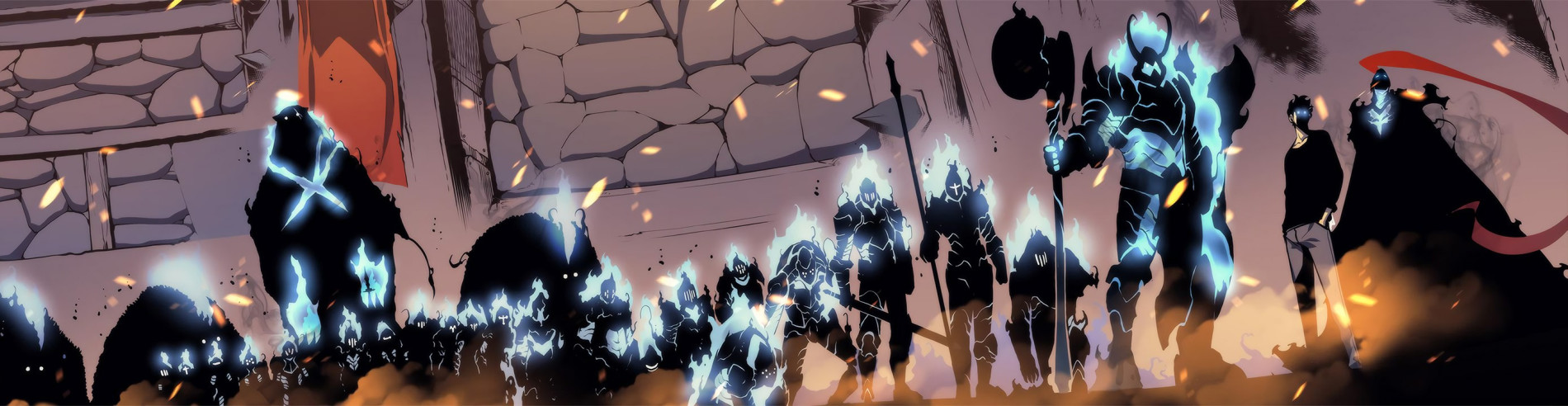
A-1 Pictures delivered a masterclass in dynamic action direction. The transition from webtoon panels to animated sequences requires careful attention to line work, aura effects, and spatial movement, areas where Season 2 excels. Combat choreography features impact frames, fluid camera panning, and high-contrast color shading that make Jinwoo's shadow army—featuring fan-favorites like Igris and Tank—pop off the screen with striking dark-purple energy.
2. Music & Sound Design (Hiroyuki Sawano)
Legendary composer Hiroyuki Sawano returns to supply an epic, hybrid orchestral-electronic soundtrack that elevates the intensity of every boss encounter. Sawano’s signature heavy basslines, choir chants, and sudden crescendos fit the power-fantasy genre seamlessly, transforming routine dungeon clears into monumental cinematic moments. Opening and ending themes by prominent artists add a polished polish to every episode's bookends.
Pros & Cons Breakdown
Pros:
- Top-Tier Action Production: World-class battle choreography and fluid visual effects by A-1 Pictures.
- Pacing and Cliffhangers: Excellent episodic pacing that keeps viewers hooked from start to finish.
- Emotional Payoffs: Strong character beats regarding Jinwoo’s family dynamic balance out the non-stop combat.
- Exceptional Score: Hiroyuki Sawano’s soundtrack adds grand scale to every combat sequence.
Cons:
- Side Character Shafting: Secondary hunters often feel like bystanders designed solely to showcase Jinwoo's superior power.
- Predictable Stakes: Because Jinwoo is vastly overpowered compared to normal hunters, tension relies heavily on world-ending threats rather than personal physical danger.
Final Conclusion & Verdict
Solo Leveling Season 2 delivers precisely what fans of the power-fantasy genre desire: uncompromised spectacle, breathtaking animation, and satisfying character growth. While it follows a straightforward narrative archetype, its execution is top-tier across animation, sound design, and pacing. It stands as a prime example of how modern web novel adaptations can capture a global audience when backed by dedicated studio artistry.
Overall Rating: 9/10
Who is this for? Essential viewing for fans of dark fantasy, high-octane action, RPG progression mechanics, and top-quality anime production.