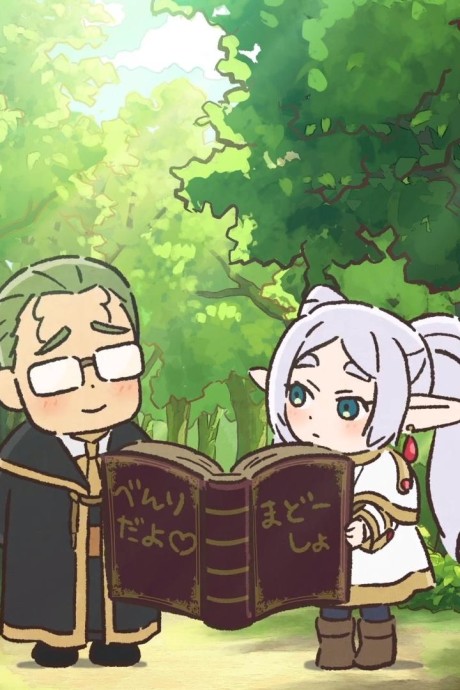
Introduction: The Fantasy Epilogue That Redefined a Genre
For decades, traditional high-fantasy storytelling in Japanese animation has adhered strictly to the classic Hero's Journey framework. Audiences are intimately familiar with the trajectory: an unlikely protagonist gathers a ragtag band of companions, embarks on a perilous quest across vast continents, and ultimately confronts a shadowy Dark Lord to restore equilibrium to the realm. The battle ends, the world is saved, and credits roll over an implied happily-ever-after. However, Frieren: Beyond Journey's End (Sōsō no Furīren), adapted from Kanehito Yamada and Tsukasa Abe's celebrated manga by Studio Madhouse, poses an infinitely more poignant question: What happens after the grand adventure concludes?
Directed by Keiichirō Saitō and scripted by Tomohiro Suzuki, Frieren: Beyond Journey's End emerged as a generational milestone in modern fantasy television. Rather than using high-stakes existential battles as its primary narrative fuel, the series turns inward, exploring memory, mortality, quiet grief, and the agonizing speed at which human lives flash past the eyes of an immortal elf. It is a rare work of media that prioritizes patience over spectacle and emotional intimacy over constant escalation. In doing so, it has captured the hearts of millions worldwide and established an unprecedented benchmark for fantasy anime.
Summary & Setup (Spoiler-Free)
The story begins where most epic fantasy sagas end. The Hero Himmel, the dwarven warrior Eisen, the corrupt yet warm-hearted priest Heiter, and the elven mage Frieren have successfully defeated the Demon King after a decade-long crusade. As the nation celebrates peace, the party gathers one last time to watch a celestial meteor shower that occurs once every half-century. Frieren, whose elven lifespan spans thousands of years, casually remarks that fifty years is a brief period and promises to show them a better viewing spot next time.
When Frieren returns five decades later, she finds her former allies transformed by age. Himmel is now a frail old man; Heiter is weathered by time; Eisen has grown too stiff to wield his battleaxe. Shortly after their brief reunion, Himmel passes away peacefully. It is at Himmel's funeral that Frieren experiences a sudden, crushing awakening: despite spending ten years traveling side-by-side with him, she realized she made no effort to get to know him—simply because a decade felt like a mere drop in the ocean to her long life. Distraught by her own emotional detachment, Frieren embarks on a new trek toward Ende—the land in the far north where souls are said to rest—to speak with Himmel's spirit one last time. Along the way, she adopts two young disciples: Fern, a prodigiously talented human mage raised by Heiter, and Stark, an anxious yet fiercely loyal warrior trained by Eisen.
In-Depth Narrative & Thematic Analysis
1. The Weight of Immortality and Fleeting Time
At the absolute core of Frieren lies an exquisite exploration of temporal perception. Fantasy literature often treats immortality as a heroic superpower or a cool backdrop, but Yamada and Abe frame it as a tragic barrier to human connection. To Frieren, a decade-long journey to defeat the Demon King was merely a fraction of a percent of her existence. Human lives appear to her like brief sparks in a fireplace—igniting, glowing brilliantly, and extinguishing before she can fully comprehend their warmth.
The brilliance of the narrative structure lies in how Frieren's second journey retraces the geographic steps of her original adventure. Every village, statue, and meadow she visits with Fern and Stark is imbued with memories of Himmel, Eisen, and Heiter. Through a series of subtle flashbacks, the series demonstrates how Himmel spent his life leaving behind small acts of kindness and commissioning bronze statues of himself not out of vanity, but to ensure that Frieren would never feel truly alone once her human companions were gone. The story transforms grief from a singular, traumatic shock into an ongoing process of self-discovery, proving that loving someone often means learning to appreciate them long after they are gone.
2. Character Breakdown: Frieren, Fern, and Stark
- Frieren: Voice-acted with understated perfection by Atsumi Tanezaki, Frieren is a masterclass in slow-burn character development. She begins as emotionally distant, driven primarily by an obsession with collecting mundane folk magic (such as spells that turn sweet grapes sour or remove rust from bronze statues). As the journey progresses, her growth is measured not by new battle transformations, but by small behavioral shifts: waking up early to watch the sunrise with Fern, remembering a companion's favorite dessert, or recognizing her own developing maternal instincts.
- Fern: Portrayed by Kana Ichinose, Fern represents the pragmatic, disciplined human grounding Frieren's airy indifference. Having lost her parents to war and been rescued by Heiter, Fern views magic as a practical tool for survival rather than a casual hobby. Her relationship with Frieren mirrors that of a sensible daughter caring for an eccentric, sleepy mother. Fern's growth involves learning that efficiency isn't everything and that taking time to enjoy trivial matters is part of living a full life.
- Stark: Voiced by Chiaki Kobayashi, Stark brings a vital comedic and physical energy to the party. Despite possessing superhuman strength inherited from Eisen's brutal training, Stark is plagued by imposter syndrome and cowardice. His character arc is a refreshing subversion of typical shonen warriors: he admits when he is terrified, yet stands his ground when innocent lives are threatened. The dynamic between Stark and Fern provides a charming, grounded romance sub-plot that evolves with realistic, youthful awkwardness.
3. Deconstructing Fantasy Tropes: Magic as a Tool of Everyday Joy
Unlike contemporary fantasy series that treat magic systems as rigid scientific equations or combat-focused mana pools, Frieren restores a sense of ancient wonder to its spellcasting. Magic in this world is governed by visualization; a mage can only cast what they can clearly picture in their mind. This principle elevates combat encounters into philosophical duels of conviction, best illustrated in the intense Aura the Guillotine Arc and the First-Class Mage Exam Arc.
Moreover, the narrative repeatedly highlights that the most meaningful magic is not catastrophic offensive spells like Zoltraak, but minor utility spells. Frieren's favorite spell—one that creates a field of blue moon-weed flowers—serves no tactical purpose in battle, yet it holds supreme narrative value because it allows her to honor Himmel's memory and bring beauty into a world recovering from conflict.
Visuals, Audio, and Production Craftsmanship
Animation and Aesthetic Direction (Studio Madhouse)
Studio Madhouse delivered one of the most visually stunning productions in recent anime history. Under Keiichirō Saitō's direction, the visual presentation excels equally during quiet slice-of-life vignettes and high-octane combat sequences. Background art depicts sprawling, lush wilderness, crumbling stone castles, and rustic European-inspired towns with incredible atmospheric depth. The environmental storytelling is reinforced by seasonal shifts—snow drifts accumulating on cloaks, fallen autumn leaves crunching under boots, and sunlight filtering through dense forest canopies.
When action occurs, Madhouse pulls out all the stops. The battle sequences feature breathtaking key animation with dynamic camera moves, impactful sound design, and clean spell telemetry that avoids visual clutter. The contrast between the tranquil pacing of daily travel and the sudden, lethal velocity of high-level magic fights keeps the viewer completely immersed.
Symphonic Storytelling: Evan Call’s Soundtrack
The musical score, composed by Evan Call (known for his iconic work on Violet Evergarden), acts as the emotional heartbeat of the entire series. Utilizing traditional Celtic instruments, sweeping orchestral strings, woodwinds, and acoustic guitars, Call weaves a rich tapestry of nostalgia, warmth, and melancholic grandeur. Tracks throughout the series elevate simple travel montages into deeply evocative cinematic experiences.
Voice Performance Excellence
The Japanese voice cast delivers career-defining work. Atsumi Tanezaki balances Frieren's dry, quiet speech patterns with subtle inflections of warmth and sorrow. Nobuhiko Okamoto breathes incredible life into Himmel, ensuring that even in brief memories, the Hero feels like a genuine, inspiring beacon of light rather than a flat archetype. Kana Ichinose and Chiaki Kobayashi capture the endearing banter of youth, rounding out an ensemble cast with flawless chemistry.
Pros & Cons
To maintain a rigorous critical lens, here is a balanced summary of the series' core strengths and minor limitations:
- Pros:
- Unmatched Emotional Resonance: A profound, beautifully paced exploration of time, memory, grief, and human connection.
- Flawless Production Value: Magnificent background artistry, fluid fight choreography, and a masterclass orchestral score by Evan Call.
- Exceptional Character Writing: Highly organic character development where subtle gestures speak louder than dramatic monologues.
- Thoughtful Worldbuilding: Fantasy geography and magic systems that prioritize thematic coherence over superficial power scaling.
- Cons:
- Deliberate, Slow Pacing: Viewers seeking non-stop, adrenaline-fueled battle shonen may find the meditative slice-of-life episodes slow.
- Understated Emotional Delivery: Frieren's stoic demeanor means emotional climaxes are often quiet and reflective rather than bombastic.
Final Conclusion & Recommendation
Frieren: Beyond Journey's End is nothing short of a modern fantasy masterpiece. By daring to focus on the quiet echoes left in the wake of a heroic quest, Studio Madhouse and the original creators have crafted a narrative that feels both timeless and deeply transformative. It reminds us that life's true value does not lie in grand historical achievements, but in the fleeting, everyday moments shared with those we care about—the meals shared at a roadside inn, the small jokes told under a starry sky, and the simple effort to understand another person's heart.
Overall Score: 9.8 / 10
Who Is This Show For? This series is essential viewing for fans of introspective fantasy, character-driven dramas, and rich worldbuilding. Whether you are a lifelong anime enthusiast or someone who appreciates literary storytelling, Frieren is an unforgettable journey that will linger in your mind long after the final episode ends.