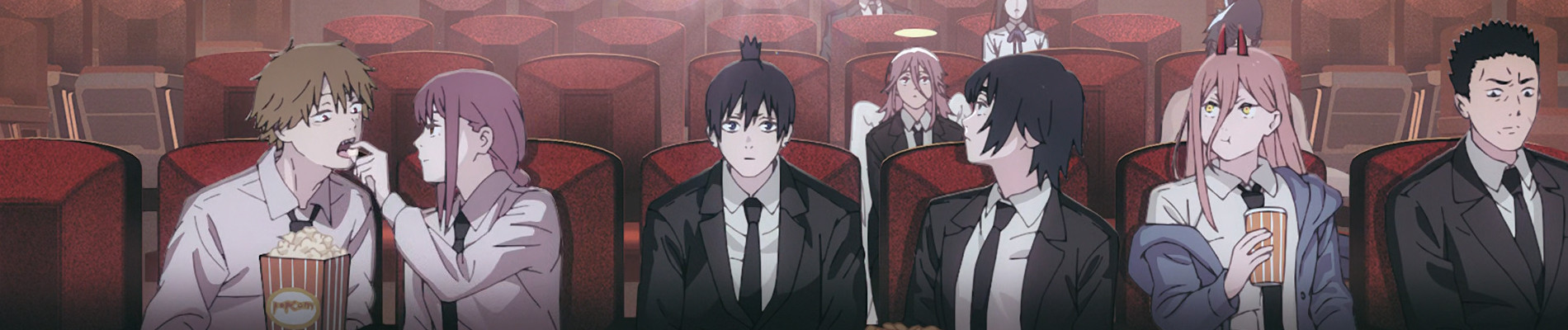
1. Introduction: The Cinematic Evolution of Chainsaw Man
When Tatsuki Fujimoto’s Chainsaw Man debuted in Weekly Shōnen Jump, it immediately shattered traditional shōnen conventions with its chaotic energy, dark surrealism, and deeply human emotional core. Following the monumental success of MAPPA’s first season of the television anime adaptation, the studio made a bold and inspired creative decision: rather than adapting the fan-favorite Bomb Devil arc (commonly known as the 'Reze Arc') into a traditional weekly television format, they crafted it into a feature-length theatrical film titled Chainsaw Man – The Movie: Reze Arc.
This theatrical presentation represents a crucial narrative turning point for the entire franchise. The Reze Arc is widely regarded by manga readers as the exact moment where Chainsaw Man transitions from a gory monster-hunting spectacle into a deeply tragic, character-driven story exploring vulnerability, manufactured affection, state control, and the desperate yearning for genuine human intimacy. Directed by Tatsuya Yoshihara, who stepped into the directorial role following Ryu Nakayama's tenure on Season 1, the film elevates Fujimoto’s subverted shōnen tropes into a masterclass of visual storytelling. In this detailed analysis, we dissect how Chainsaw Man – The Movie: Reze Arc achieves its status as a contemporary anime masterpiece through its character dynamics, thematic depth, visual direction, and sonic design.
2. Plot Summary & Narrative Premise
Note: The following summary provides essential premise details while remaining spoiler-free regarding the final act's major twists.
Set immediately after the harrowing clashes against the Katana Man and the Snake Devil, the film finds Denji attempting to settle into his newfound routine as a licensed Devil Hunter for Public Safety Special Division 4. Living under the roof of Aki Hayakawa alongside the chaotic Blood Fiend Power, Denji enjoys a level of physical comfort he never knew as an impoverished child. Yet, despite having regular meals and a roof over his head under the watchful eye of Makima, Denji is plagued by an inner void. Having given up his human heart to fuse with Pochita, he questions whether his emotional capacity died alongside his flesh, wondering if he is capable of experiencing genuine love or if he is merely driven by primitive physical desires.
His existential malaise is suddenly interrupted when he meets Reze, a mysterious and incredibly charming girl who works at a local coffee shop. Denji stumbles into her establishment during a sudden summer rainstorm, and an instantaneous spark ignites between them. Unlike the manipulative authority figures or battle-hardened colleagues in Denji’s daily life, Reze treats him with playful teasing, warmth, and gentle empathy. She offers him a tantalizing glimpse of what a normal, peaceful life could look like—one completely devoid of Devil Hunting, bloody slaughter, and corporate servitude. However, in the world created by Tatsuki Fujimoto, innocence is rarely unblemished. As their late-night adventures culminate during a local summer festival, underlying motives unravel, plunging Tokyo into a fiery conflict where romantic longing collides violently with deadly state-level espionage.
3. In-Depth Narrative & Character Analysis
Denji: The Tragic Search for Emotional Intimacy
At the beating heart of Chainsaw Man is Denji’s fundamental lack of basic social conditioning. Having spent his entire childhood enslaved by the Yakuza to clear his deceased father’s astronomical debt, Denji was systematically denied foundational human experiences, education, and affection. Consequently, his stated goals—eating jam on bread, sleeping in a clean bed, or touching a woman—are frequently mocked by onlookers as shallow and hedonistic. However, the Reze Arc meticulously deconstructs this perception, demonstrating that Denji’s basic physical desires are merely proxy goals for his deeper, unarticulated longing for emotional safety and unconditioned love.
Reze represents the first person in Denji's life who offers him tenderness without explicitly demanding his chainsaw heart in return—at least on the surface. His interactions with Reze expose his profound, childlike vulnerability. When she playfully suggests running away together to live a normal life free from duty, Denji is forced to confront an agonizing internal dilemma: should he remain in his comfortable, leash-bound stability under Makima’s authority, or risk everything for a dangerous, unwritten future with someone who seems to truly see him as a human being rather than a weapon?
Reze / Bomb Devil: The Weaponized Mirror
Reze stands as one of the most compelling, nuanced, and tragic figures in modern manga and anime history. Functioning as a direct narrative mirror to Denji, Reze’s narrative arc reveals that she, too, is a victim of systemic exploitation. Raised in secrecy as a child soldier within a covert Soviet military program—often referred to as a 'Secret Dog'—she was subjected to brutal military conditioning and scientific experimentation, ultimately transforming her into the Bomb Devil hybrid. Like Denji, her entire existence has been defined by coercion, weaponization, and complete loss of personal autonomy.
What makes Reze so captivating in this film adaptation is the deliberate, agonizing ambiguity of her feelings toward Denji. Throughout the story, the narrative challenges the audience to discern where her calculated spy craft ends and her genuine human emotions begin. Did she truly feel a spark of connection with Denji, or was every smile and blush merely a weaponized tactic to capture the Chainsaw Devil? Director Tatsuya Yoshihara handles this duality with exquisite cinematic subtlety. Her dual identity—as both a lethal, terrifying hybrid capable of leveling city blocks and a lonely girl who never had the opportunity to attend school—creates a heartbreaking symmetry between her and Denji.
Makima’s Shadow: Omnipresent Psychological Control
Even when Makima is physically absent from the screen, her presence hangs over the entire film like an inescapable, chilling shadow. In the Reze Arc, Makima’s role shifts subtly from a benevolent savior figure into something far more sinister. Her interactions with Denji are meticulously calculated to maintain psychological ownership and dependence. The film masterfully contrasts Reze’s chaotic, unpredictable offer of wild freedom with Makima’s structured, clinical, and conditional control. This thematic conflict elevates the story far beyond a standard action romance, framing it as a profound battle for Denji’s agency, identity, and soul.
4. Visuals & Audio: MAPPA’s Artistic Breakthrough
Cinematic Direction and Animation Craftsmanship
MAPPA’s production quality in Chainsaw Man – The Movie: Reze Arc represents a triumphant evolution of the franchise's visual style. Director Tatsuya Yoshihara and his animation team opted for a cinematic approach that flawlessly fuses photorealistic urban backgrounds with explosive, highly kinetic 2D animation. The film relies heavily on atmospheric lighting contrasts—ranging from the soft, rain-slicked neon glow of Tokyo's back alleys during quiet conversations to the blinding, fiery orange detonations that shatter the night during combat sequences.
The action choreography during the Bomb Devil’s rampage is a technical marvel. The sense of impact, weight, and momentum in every explosion feels incredibly tangible. Unlike many modern blockbusters that rely excessively on sterile 3D models, this film prioritizes hand-drawn expression, squash-and-stretch dynamics, and visceral character acting. Even amidst the most chaotic, earth-shattering battles, the camera never loses track of the emotional stakes and human vulnerability driving the fight.
Sound Design & Kensuke Ushio's Soundtrack
Composer Kensuke Ushio delivers what is indisputably one of the most memorable film scores in recent anime history. Blending relentless industrial techno, metallic percussion, and haunting acoustic piano compositions, the soundtrack mirrors the film’s dual nature. During combat sequences, heavy synth waves and frantic rhythmic patterns amplify the destruction brought forth by the Bomb Devil. Conversely, during quiet character moments—such as Denji and Reze sneaking into a high school swimming pool at midnight—the music drops to delicate piano chords and gentle ambient tones, perfectly capturing the fleeting, fragile beauty of youthful romance.
Voice Performance Excellence
The vocal performances across the board are phenomenal. Kikunosuke Toya brings incredible depth to Denji, seamlessly balancing teenage bravado with raw, heartbreaking vulnerability. However, it is Reina Ueda’s performance as Reze that truly dominates the film. Ueda transitions effortlessly between charming, coy innocence and cold, terrifying lethality, instilling Reze with a multifaceted persona that lingers in the viewer’s mind long after the credits roll. Supporting performances by Shogo Sakata (Aki Hayakawa), Fairouz Ai (Power), and Tomori Kusunoki (Makima) further solidify the film's emotional weight.
5. Pros & Cons
Pros
- Pacing and Structure: Adapting a focused, 12-chapter manga arc into a 100-minute feature film allows the narrative to unfold naturally with optimal cinematic pacing, avoiding filler or rushed exposition.
- World-Class Animation: MAPPA delivers feature-film animation at the absolute peak of the industry, combining fluid 2D action, cinematic lighting, and detailed background art.
- Emotional and Thematic Depth: Subverts standard shōnen tropes by delivering a mature, melancholic exploration of trauma, systemic exploitation, and the search for authentic human connection.
- Incredible Musical Score: Kensuke Ushio’s soundtrack perfectly elevates both the adrenaline-fueled action and the delicate romantic moments.
Cons
- Prerequisite Knowledge Required: As a direct narrative continuation of the first season, the film offers little recap and requires viewers to already be familiar with the world and characters.
- Graphic Violence & Body Horror: Faithful to Tatsuki Fujimoto's original work, the film features intense visceral violence and gore that may prove overwhelming for sensitive viewers.
6. Final Conclusion & Recommendation
Overall Rating: 9.5 / 10
Chainsaw Man – The Movie: Reze Arc is a triumph of modern anime filmmaking. It effortlessly bridges the gap between high-octane battle shōnen and deeply melancholic character study, proving that theatrical anime adaptations can stand as genuine cinematic art. By grounding its explosive action within the profound emotional isolation of its main characters, MAPPA and director Tatsuya Yoshihara have delivered a story that resonates long after the final frame.
Who Is This Movie For? This film is an essential watch for existing fans of Chainsaw Man, dark fantasy enthusiasts, and lovers of character-driven storytelling. If you appreciate subverted genre conventions, top-tier animation quality, and narratives that balance thrilling action with heartbreaking emotional stakes, The Reze Arc is an unmissable masterpiece.