Introduction: The Unapologetic Triumph of Modern Anarchy
Every few years, the anime industry witnesses a production that refuses to obey established genre conventions. In an era dominated by dark fantasy epics and formulaic power-fantasy stories, Dan Da Dan—adapted from Yukinobu Tatsu's celebrated manga by studio Science Saru—bursts onto the screen like a neon-fueled fever dream. Combining Japanese urban legends, extraterrestrial conspiracies, high school romantic comedy, and boundary-pushing kinetic animation, the series stands as one of the most vibrant and audacious television achievements in recent animation history.
What makes Dan Da Dan genuinely fascinating is not merely its eccentric premise—which involves lost testicles, speed-demon curses, and cross-dressing alien invaders—but its extraordinary capacity to ground absolute absurdity in raw, authentic human emotion. Under the visionary direction of Fuga Yamashiro, the adaptation translates Yukinobu Tatsu’s breathtakingly dense manga line-work into a fluid, cinematic experience. This article provides a comprehensive critical analysis of Dan Da Dan, evaluating its narrative mechanics, thematic depth, production design, and ultimate place in the modern anime renaissance.
Summary: A Cosmic Bet with Supernatural Consequences
Note: The following summary remains spoiler-free regarding major late-arc revelations, though light setup details are discussed.
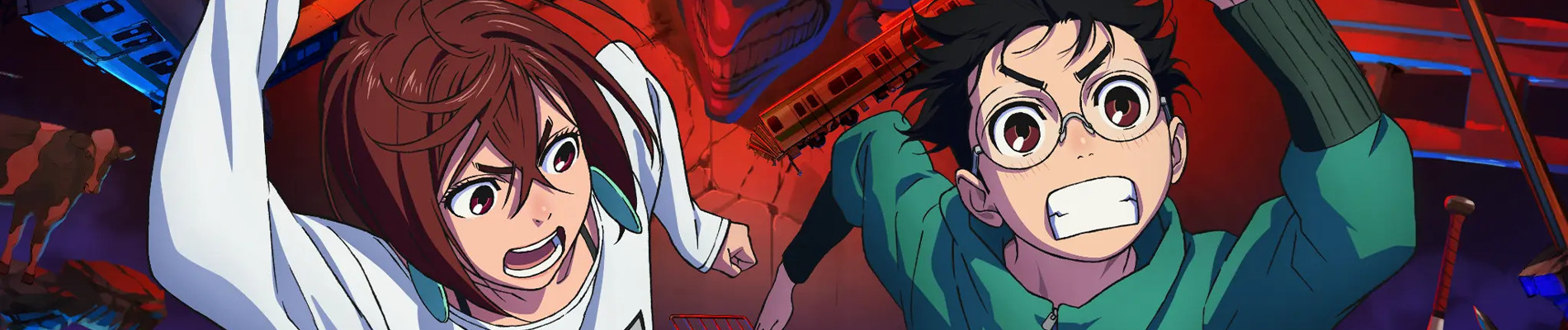
The narrative centers on two high school misfits with polar-opposite belief systems. Momo Ayase is a fierce, assertive gyaru raised by an eccentric spirit medium grandmother; she wholeheartedly believes in ghosts and yokai but thoroughly dismisses the idea of aliens. Conversely, Ken Takakura (whom Momo nicknames Okarun due to his shared name with her favorite actor) is an isolated, bullied UFO enthusiast who firmly believes in extraterrestrial life while scoffing at the supernatural.
To settle their debate, the two make a wager: Momo visits an abandoned hospital known for alien sightings, while Okarun ventures into a haunted tunnel notorious for dark spirits. To their mutual horror, both are proven completely right. Okarun is targeted and cursed by the terrifying Turbo Granny—a vengeful yokai who steals his physical manhood and endows him with demonic speed—while Momo is abducted by the subterranean Serpoians, an alien race seeking human reproductive organs to save their dying species. When Momo awakens her dormant psychokinetic powers to save Okarun, the pair form a chaotic alliance. Together, they embark on a surreal quest across Japan to fight off bizarre alien invaders, exorcise tragic spirits, and recover Okarun’s missing anatomical parts.
In-Depth Analysis: Subverting Shonen Tropes & Narrative Quality
1. Character Dynamic: The Grounding Heart of Momo and Okarun
The true engine driving Dan Da Dan is not its spectacle, but the evolving emotional intimacy between Momo Ayase and Okarun. Unlike standard shonen tropes where romance is relegated to an afterthought or endless tsundere misunderstandings, Dan Da Dan crafts a deeply empathetic, slow-burn partnership based on mutual respect and vulnerability.
- Momo Ayase: Far from the traditional damsel in distress, Momo is proactive, quick-witted, and emotionally intelligent. Her gyaru style and fiery demeanor mask a deep capacity for empathy. Her psychokinetic abilities—visualized as gigantic glowing hands—require tactical dexterity rather than brute force.
- Ken 'Okarun' Takakura: Okarun begins as a deeply insecure young man whose obsession with aliens stems from loneliness. Upon absorbing Turbo Granny's curse, his transformation into his dual form turns his posture slouchy, his voice raspy, and his demeanor melancholic. Yet, his motivation remains steadfastly chivalrous: protecting Momo at all costs.
The dialogue between the duo flows naturally, switching effortlessly from bickering teenage banter to genuine emotional support. Their burgeoning romance feels earned because it is forged in shared trauma and quiet, tender victories in post-battle moments.
2. Thematic Depth: Tragedy Behind the Monstrous
A central pillar of Dan Da Dan’s narrative power is its nuanced treatment of its antagonists, particularly the yokai. While alien invaders represent cold, utilitarian sci-fi threats driven by biological imperative, the spirits and cryptids are born from human sorrow, regret, and systemic failure.
The series excels at shifting tonal gears without causing narrative whiplash. For instance, the encounter with Acrobatic Silky transforms from a terrifying battle against a contorted monstrosity into a heartbreaking exploration of maternal grief, poverty, and sacrifice. By granting even grotesque monsters profound backstories, author Yukinobu Tatsu and the animation team remind the audience that folklore is ultimately a mirror reflecting real-world human suffering.
Visuals & Audio: Science Saru's Production Masterclass
1. Animation & Color Scripting
Studio Science Saru, famed for groundbreaking projects like Keep Your Hands Off Eizouken! and Devilman Crybaby, brings an unmatched level of artistic freedom to Dan Da Dan. Director Fuga Yamashiro utilizes deliberate color scripting to differentiate between reality, the spiritual realm, and extraterrestrial incursions:
- Mundane High School Life: Rendered in soft pastel tones, clean linework, and grounded camera angles.
- Yokai Encounters: Defined by harsh monochromatic palettes—frequently stark blacks, whites, and violent crimson highlights—creating an atmosphere of intense claustrophobia and ancient terror.
- Alien Interventions: Bursting with psychedelic neon greens, purples, and distorted geometric perspectives that highlight the unnatural nature of extraterrestrial technology.
Action choreography in Dan Da Dan abandons static power-up sequences in favor of continuous momentum. Okarun’s high-speed dashes feel incredibly heavy, with impact frames, smeared linework, and camera tilts conveying raw velocity.
2. Soundtrack & Sound Design
The musical score, composed by the legendary Kensuke Ushio (Chainsaw Man, A Silent Voice), is nothing short of revolutionary. Ushio blends heavy electronic breakbeats, traditional Japanese acoustic instruments, synth-wave, and classical sampling (such as reimagined classical overtures during alien skirmishes). The music acts as a visceral pulse, driving the kinetic energy of every battle while offering ambient, introspective soundscapes during emotional character beats.
The voice performance is equally stellar in both Japanese and English dubs. Shion Wakayama (Momo) delivers an energetic, expressive performance, while Natsuki Hanae (Okarun) brilliantly toggles between meek teenage squeaks and the gravelly, battle-weary cadence of his cursed form.
Pros & Cons
Pros
- Peerless Animation Fluidity: Science Saru delivers dynamic, expressive, and visually inventive animation in every single episode.
- Masterful Genre Blending: Effortlessly merges high-octane battle shonen, sci-fi horror, folklore, and genuine romantic comedy without feeling disjointed.
- Incredible Musical Score: Kensuke Ushio's electronic and orchestral soundtrack elevates action sequences into unforgettable sensory experiences.
- Compelling Lead Duo: Momo and Okarun possess an authentic, endearing chemistry that ranks among the best in modern anime.
- Emotional Resonance: Antagonists are given rich, empathetic backstories that add genuine tragic weight to the supernatural battles.
Cons
- Initial Tonal Barrier: Early episodes feature extreme, absurd, and occasionally crude concepts (such as threats of alien abduction/dissection and sexualized body horror) that may uncomfortable or alienate sensitive viewers.
- Frantic Pacing: The lightning-fast narrative speed leaves very little downtime, which may feel overwhelming for fans who prefer slower, lore-heavy worldbuilding.
Final Conclusion & Recommendation
Overall Rating: 9.5 / 10
Dan Da Dan is a triumphant declaration of what television anime can accomplish when brilliant source material meets an animation studio unconstrained by creative conformity. It respects its audience's intelligence, delivering high-stakes action alongside legitimate emotional depth, breathtaking art direction, and a standout musical score.
Who Is This Show For? This series is an absolute must-watch for fans of dark battle shonen (Jujutsu Kaisen, Chainsaw Man), lovers of supernatural folklore and sci-fi mysteries, and anyone seeking a refreshing, character-driven story with top-tier production values. If you can push past its wild and raunchy opening hook, you will discover one of the most rewarding, heartfelt, and visually dazzling anime achievements of the decade.