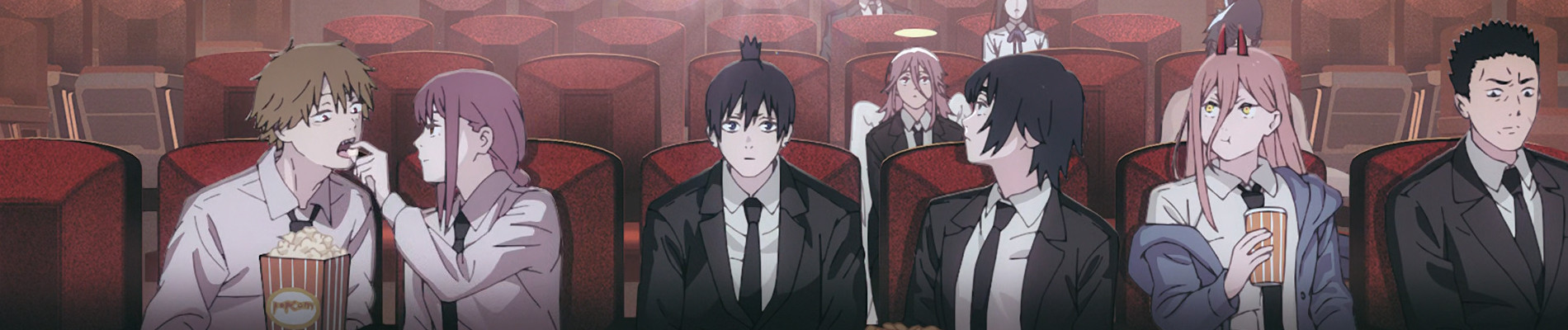
Introduction: The Explosive Return of Tatsuki Fujimoto's Dark Fantasy
When Tatsuki Fujimoto’s Chainsaw Man hit television screens with its twelve-episode first season, it fundamentally disrupted the shonen landscape. By blending grindhouse cinema sensibilities, absurdist humor, and existential dread, the series established itself as a premier dark fantasy powerhouse. However, fans of the original manga knew that Season 1 was merely a prologue. The true emotional core and narrative turning point of the series’ early chapters lay in the infamous "Bomb Girl Arc" (commonly known as the Reze Arc).
Instead of adapting this pivotal narrative as a traditional television sequel, Studio MAPPA took a bold cinematic gamble by producing Chainsaw Man – The Movie: Reze Arc. Helmed by director Tatsuya Yoshihara, the film transforms Fujimoto's volatile, romantic, and tragic vision into a feature-length cinematic experience. This review and analysis explores how the film handles its complex thematic weight, evaluates MAPPA’s elevated animation standards, and unpacks the tragic romance between Denji and the mysterious Soviet operative, Reze.
Summary: A Quiet Romance Lit by Dynamite (Spoiler Warning)
Warning: The following summary contains spoilers for the Chainsaw Man feature film and manga arc.
Following the harrowing battles against the Katana Man and the Snake Devil, Denji continues his life as a Special Division 4 Devil Hunter under Makima's enigmatic guidance. Despite achieving basic comforts like regular meals and a warm bed, Denji feels an overwhelming void—a lingering doubt regarding whether he possesses a genuine human heart or merely a mechanical devil engine. Seeking shelter during a sudden rainstorm in a telephone booth, Denji meets Reze, a vibrant and charming girl working at a local coffee shop.
Unlike the harsh, transactional relationships Denji experiences at Public Safety, his bond with Reze blossoms with startling intimacy. She teaches him how to swim, shares quiet night-time visits to an empty school, and offers him an escape route from his violent life as Chainsaw Man. However, this idyllic romance shatters when Reze is revealed to be the Bomb Devil Hybrid—a Soviet secret agent dispatched to Tokyo to extract Denji's Chainsaw heart. What follows is a relentless, city-destroying battle across Tokyo, culminating in a bittersweet confrontation where genuine affection collides with inescapable duty.
In-Depth Narrative & Character Analysis
1. The Tragic Mirror: Denji vs. Reze
At its core, the Reze Arc is a poignant character study examining the illusion of choice in a world governed by institutional exploitation. Both Denji and Reze are child soldiers stripped of their autonomy. Denji was raised in crippling debt by the Yakuza, treated as a tool before being weaponized by Public Safety. Reze, conversely, was raised as a "guinea pig" in a top-secret Soviet military program, conditioned from childhood to become a living weapon.
When Denji and Reze interact, their chemistry feels remarkably authentic because they are two deeply damaged individuals attempting to mimic normal adolescent behavior. Reze’s initial flirtations may have begun as a calculated espionage maneuver, but as the narrative unfolds, her genuine longing for a normal life becomes undeniable. When she asks Denji, "Have you ever gone to school?", it is not just a conversational probe—it is a shared realization of stolen youth. Their dynamic mirrors the classic tragedy of two weapons trying to learn how to be human, only to realize that their handlers will never grant them freedom.
2. The Illusion of Escape and the Shadow of Makima
Throughout the film, the city of Tokyo acts as a claustrophobic cage disguised as a bustling metropolis. Denji is constantly presented with the illusion of freedom. Reze offers to run away with him to a distant town, challenging his blind devotion to Makima. This introduces Denji to his first real moral crossroads: remaining a compliant hound for Public Safety in exchange for superficial rewards, or taking a terrifying leap into the unknown for a chance at genuine connection.
The thematic conclusion of the arc reinforces Fujimoto's overarching critique of power structures. Even when Reze decides to abandon her mission and meet Denji at the coffee shop to run away together, her escape is silently, ruthlessly thwarted in an alleyway by Makima. The tragedy of Reze is not that she failed to love Denji, but that in Fujimoto’s world, weapons are never permitted to drop their arms.
Visuals & Audio: Studio MAPPA’s Cinematic Evolution
Cinematography and Art Direction
Studio MAPPA’s approach to the Reze Arc film marks a refinement of the aesthetic introduced in the 12-episode anime series. Director Tatsuya Yoshihara leans heavily into cinematic realism, employing grounded camera placement, naturalistic lighting, and meticulous background details. The contrast between the film's two halves is visually striking:
- The Romantic Half: Characterized by muted color palettes, soft rain dynamics, neon reflections on asphalt, and intimate close-ups that emphasize facial expressions and body language.
- The Action Half: Explodes into chaotic, high-contrast spectacle. The animation shifts dynamically, utilizing fluid hand-drawn key animation combined with seamless digital effects to capture the speed and weight of the Bomb Hybrid’s explosions.
Soundtrack and Sound Design
Composer Kenshi Yonezu and the sound engineering team deliver an exceptional auditory experience. The score transitions seamlessly from delicate acoustic piano melodies during the school break-in sequence to thunderous, distorted industrial rock during the combat set-pieces. The sound design gives immense visceral weight to every detonation; the sharp click of Reze pulling the pin on her neck trigger creates a thrilling tension that resonates through the theater audio space.
Pros & Cons
Pros
- Exceptional Pacing: Adapting a tight, self-contained 12-chapter manga arc into a 100-minute feature film prevents any filler, creating a relentless and emotionally satisfying narrative arc.
- Breathtaking Combat Choreography: The fight sequences between Chainsaw Man, the Bomb Devil, and the Second Division feature some of the finest fluid animation Studio MAPPA has ever produced.
- Complex Characterization: Reze is instantly elevated to one of the most compelling figures in modern anime, balancing terrifying lethality with profound vulnerability.
- Cinematography: Lighting, camera movement, and background art rival live-action arthouse thrillers.
Cons
- High Barrier to Entry: The film relies heavily on established character dynamics from Season 1, making it less accessible for complete newcomers.
- Relentless Emotional Gut-Punch: Audiences expecting a traditional, triumphant hero's victory may find the somber, tragic conclusion deliberately unsettling.
Final Conclusion & Recommendation
Chainsaw Man – The Movie: Reze Arc is a masterpiece of dark fantasy storytelling. It proves that anime feature films can serve as essential, high-art story progressions rather than mere non-canon side adventures. By balancing explosive, high-octane spectacle with a deeply tragic exploration of trauma and longing, the film stands out as one of the definitive anime events of the era.
Overall Rating: 9.5 / 10
Who is this for? Essential viewing for dark fantasy fans, lovers of tragic romance, and animation enthusiasts who appreciate cutting-edge action direction and cinematic storytelling.